
Composite (Tooth-Colored) Fillings

Composite fillings—also known as tooth-colored fillings—are made from a durable resin material that is carefully matched to the natural color of your teeth. They are designed to blend seamlessly with your smile while restoring strength and function to teeth affected by cavities or minor damage.


Unlike traditional silver fillings, composite fillings provide a more natural, conservative, and aesthetically pleasing solution.


Benefits of Composite Fillings vs. Silver Amalgam Fillings


Natural Appearance

Composite fillings are color-matched to your tooth, making them virtually invisible when you smile or talk. Silver amalgam fillings are noticeable and can darken teeth over time.


Strong & Durable

Composite material bonds directly to the tooth structure, helping reinforce and strengthen the tooth. Silver fillings do not bond to the tooth and rely on shape alone to stay in place.


More Conservative Treatment

Placing a composite filling often requires removing less healthy tooth structure compared to silver fillings, allowing us to preserve more of your natural tooth.


Mercury-Free

Composite fillings do not contain mercury. Silver amalgam fillings are made with a mixture of metals, including mercury.


Reduced Temperature Sensitivity

Composite fillings expand and contract less than silver fillings when exposed to hot and cold, helping reduce sensitivity and the risk of cracks over time.


A Modern, Safe Solution for Your Smile

Composite fillings are an excellent option for patients looking for a natural-looking, safe, and effective way to treat cavities or replace old silver fillings. They can be used on both front and back teeth and are designed to last with proper care.
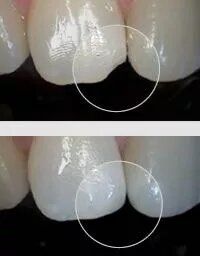
fix chipped front tooth

Most Tooth Colored Fillings (White Fillings) Are Composite Resin Fillings


Tooth-colored fillings were first introduced to the American public in the mid 1960’s. Since that time tooth colored filling materials have undergone continual improvements in durability, esthetics and material handling. The most versatile and widely used tooth colored filling today is composite resin filling. A composite is a material in which filler particles are encased in and bound together by a hard matrix material. For composite resin fillings a fluid matrix of an acrylic, called BIS-GMA, is hardened around glass filler particles to form composite resin. Trace metals (e.g. cobalt, gold and copper) give color to the glass while zirconium and titanium oxides add opacity.


How Are Composite Resin Fillings Placed?


Tooth-colored composite fillings are chemically bonded to teeth. For this reason, the placement of white fillings does not always require numbing the area being restored. Numbing (anesthetizing) the area is often required if tooth decay has progressed beneath the enamel layer and into the underlying dentin layer which surrounds the nerve of the tooth. Once decay is removed, the tooth is cleaned and a primer (weak acid) is applied to the area being restored. The primer opens pores in the enamel and dentin.

  • Read More

    A bonding agent is then flowed into the open pores and cured. Curing prepares the bonding agent to adhere to the tooth colored filling material. The filling material is then placed inside the tooth. After shaping the tooth colored filling material to resemble the natural anatomy of your tooth it is hardened by curing with a strong curing light. Once the white filling hardens, your bite will be checked to make sure your teeth fit together properly. If the tooth filling extends into the space between your teeth your dentist will also make sure you can floss between your teeth properly. Adjustments will be made if necessary followed by smoothing and polishing of your new filling.

What Are The Alternatives To Composite Resin (Tooth Colored) Fillings?

Alternatives to composite resin fillings vary depending upon the:


(a) Size of the area to be restored
(b) Strength required of the filling material
(c) Esthetics desired
(d) Desire for a longer lasting restoration.


The most esthetic and long lasting alternatives to composite tooth colored fillings are laboratory fabricated composite inlays and porcelain inlays. On the positive side, inlays are longer lasting than composite resin and also more stain resistant. Porcelain inlays do not degrade in the presence of alcohol and are even esthetic. Drawbacks when considering inlays instead of tooth colored fillings include a much higher cost and the need for at least two visits in order to place them because they are made in a dental laboratory.

  • Compomers (modified composite resins)

    Compomers (modified composite resins) are also alternatives to composite resin tooth colored fillings. The matrix of this composite filling is composed of a polymer resin and the filler is an aluminum-fluoride-silica powder. Compomers are not as wear resistant as composite resin but they release fluoride and thus are very good in non-load bearing areas more prone to decay. Although esthetically pleasing they do not offer as many options in terms of color and translucency.

  • Silicate ionomer and glass ionomer tooth fillings

    Silicate ionomer and glass ionomer tooth fillings are other alternatives to composite resin (white) fillings. Both of these materials are weaker and more brittle than the other alternatives to composite fillings. Silicate and glass ionomers are also not suited for use in back teeth where greater strength is required. Silicate and Glass Ionomer restorations are also less wear resistant than composite resin fillings and do not last as long. In addition, neither silicate or glass ionomer filling materials can match the natural appearance of composite resin. On the positive side, these restorations are capable of releasing fluoride into the tooth structure they are bonded to and in doing so strengthen the tooth and make it more resistant to decay.

  • Gold inlays

    Gold inlays are very long lasting and more biocompatible. The cost is high however, and placement of gold inlays requires at least two visits because gold inlays are made in a dental laboratory.

  • Dental amalgam

    Dental amalgam is also very strong, second only to gold among alternatives to tooth colored fillings. Dental amalgam fillings are also the least expensive alternative to white fillings and they require only one visit in order to place them. Drawbacks to dental amalgam use include the use of 43% to 54% of elemental mercury in dental amalgam filling material. For more on dental amalgam, including concerns about the safety of mercury vapor release from dental amalgam, please refer to this dental amalgam page. As the metal in dental amalgam oxidizes with age the filling material often changes color from silver to black. In addition, placement of dental amalgam fillings at the gum line often causes a dark discoloration of the gum tissue around the filling.